
Experimentation, Collaboration and Creative Challenges
a conversation with William Brand, creator and sculptor
On never-ending experimentation
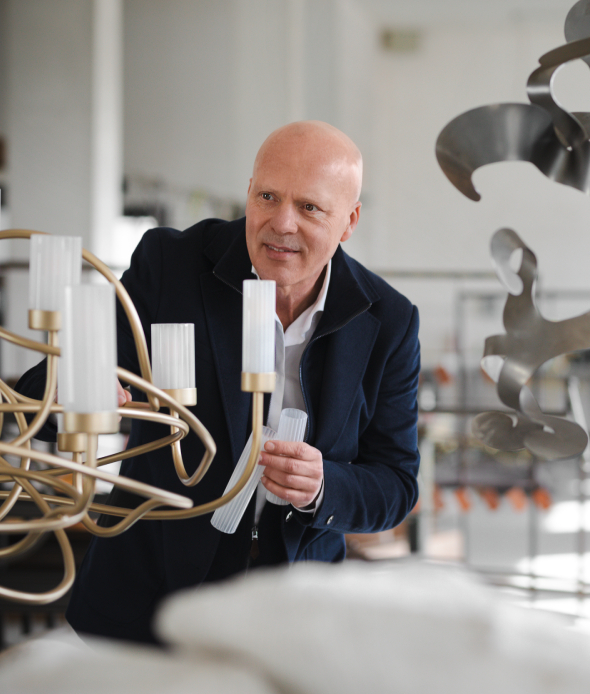
If you walk through our atelier, you’ll notice something that may seem almost stubborn: we never stop revising. Not out of uncertainty, but because the final five percent determines whether an object becomes itself or remains a decoration. This is something I’m sure every artist recognises: that moment when something looks pretty but has no backbone. I can’t stand that.
So we refine. We adjust. We tighten a line, shift the tension of a curve, observe how a surface responds when the light softens in the evening. Not in theory, but in practice: sketching, sculpting, building prototypes, installing, observing. If it does not hold, it returns to the workshop.
This is why design, prototyping, and crafting exist under one roof. Objects must be judged in real conditions, not as images on a screen. Light doesn’t live on a screen anyway. It lives on skin, on stone, on timber, on glass, on fabric.
Experimentation, then, is not about novelty. It is about clarity. Refining the medium until nothing distracts from the intent. The work is resolved when nothing can be removed without weakening it, and nothing can be added without diluting it.
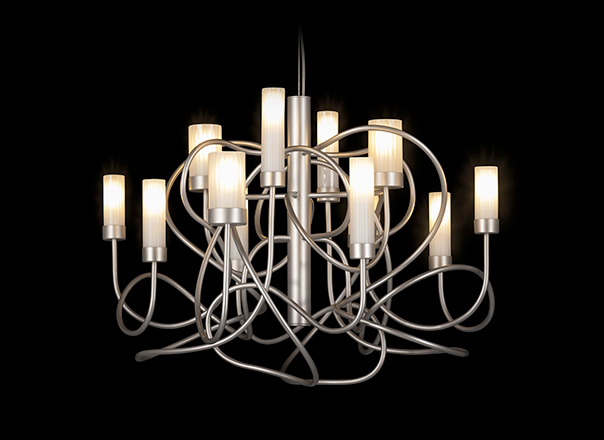
Glasswork, forging, joints, balance, even finishes — these are not decorative choices. They are structural, artistic decisions guided by clear principles. High gloss finish draws the room into the object and sharpens contrast. Satin holds and softens light, giving it a more architectural presence. When a finish begins to compete with proportion or reduces the object to an accessory, we stop.
When we introduced Silver Satin finish, it was not an additional option, but a specific character of light I was looking for: restrained, refined, able to sit calmly within stone, timber, and textile, while retaining depth in low light. Achieving that required extensive testing of primers, textures, pigments, and protective layers until the behaviour was exact.
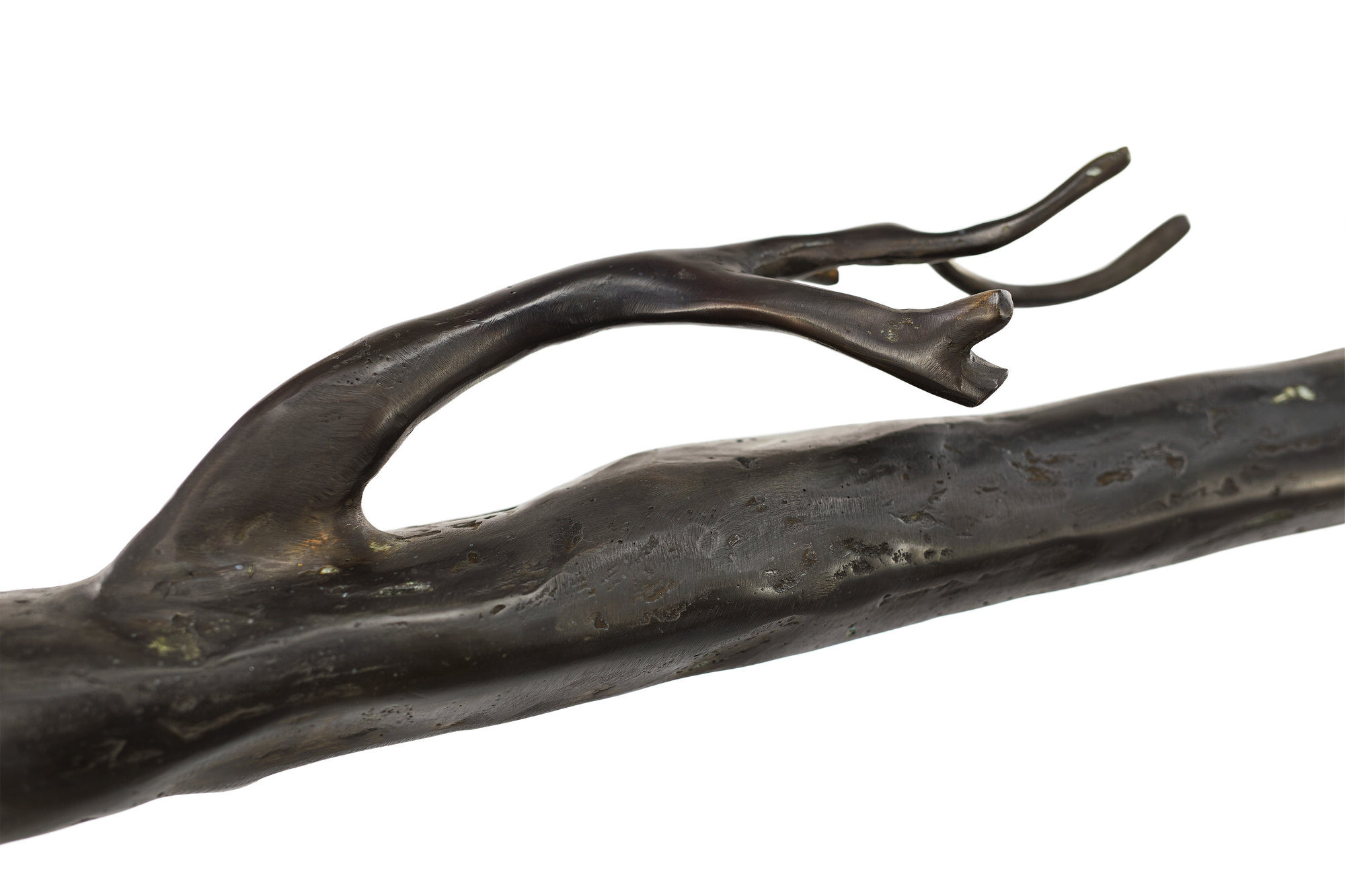
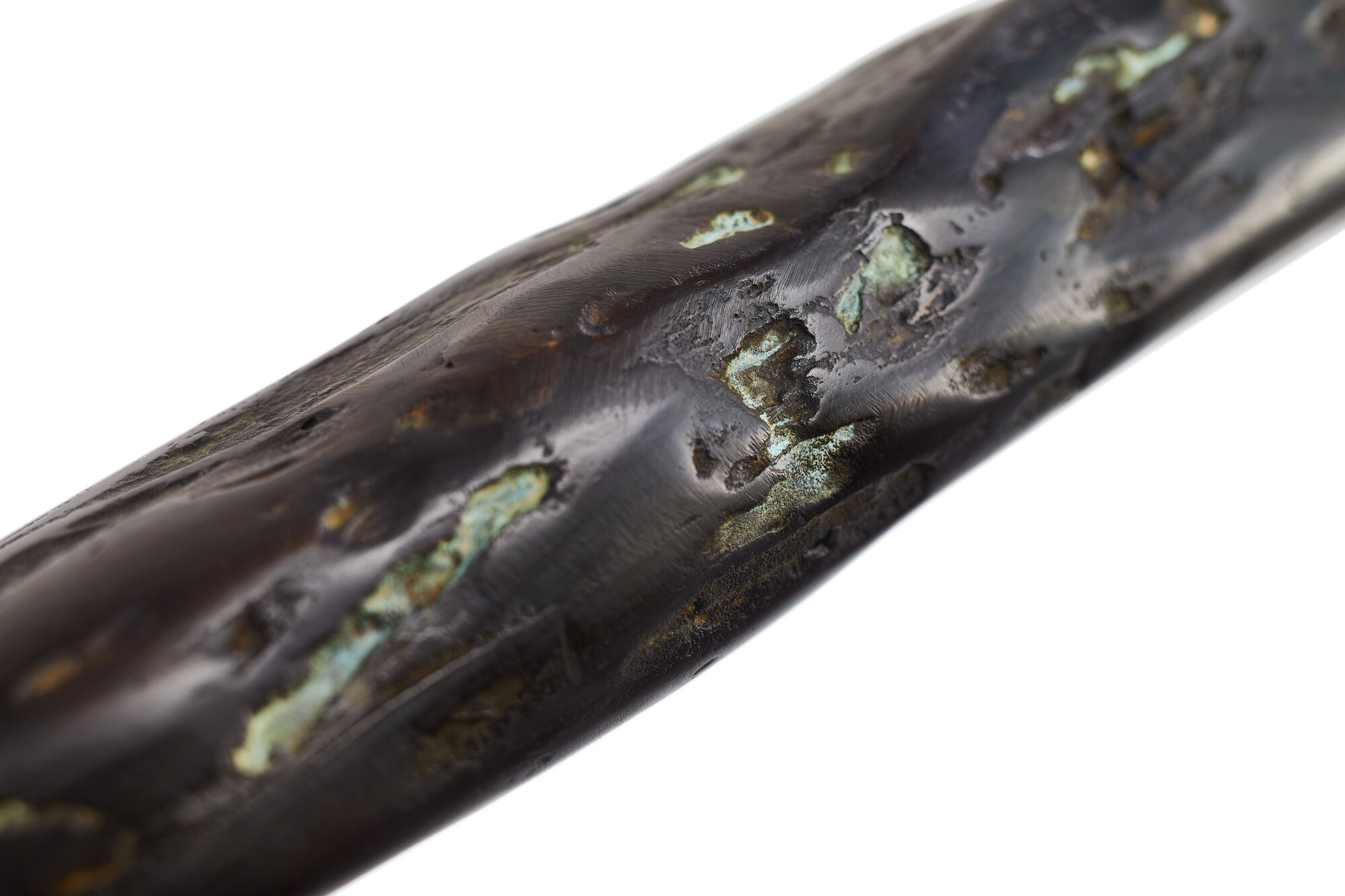
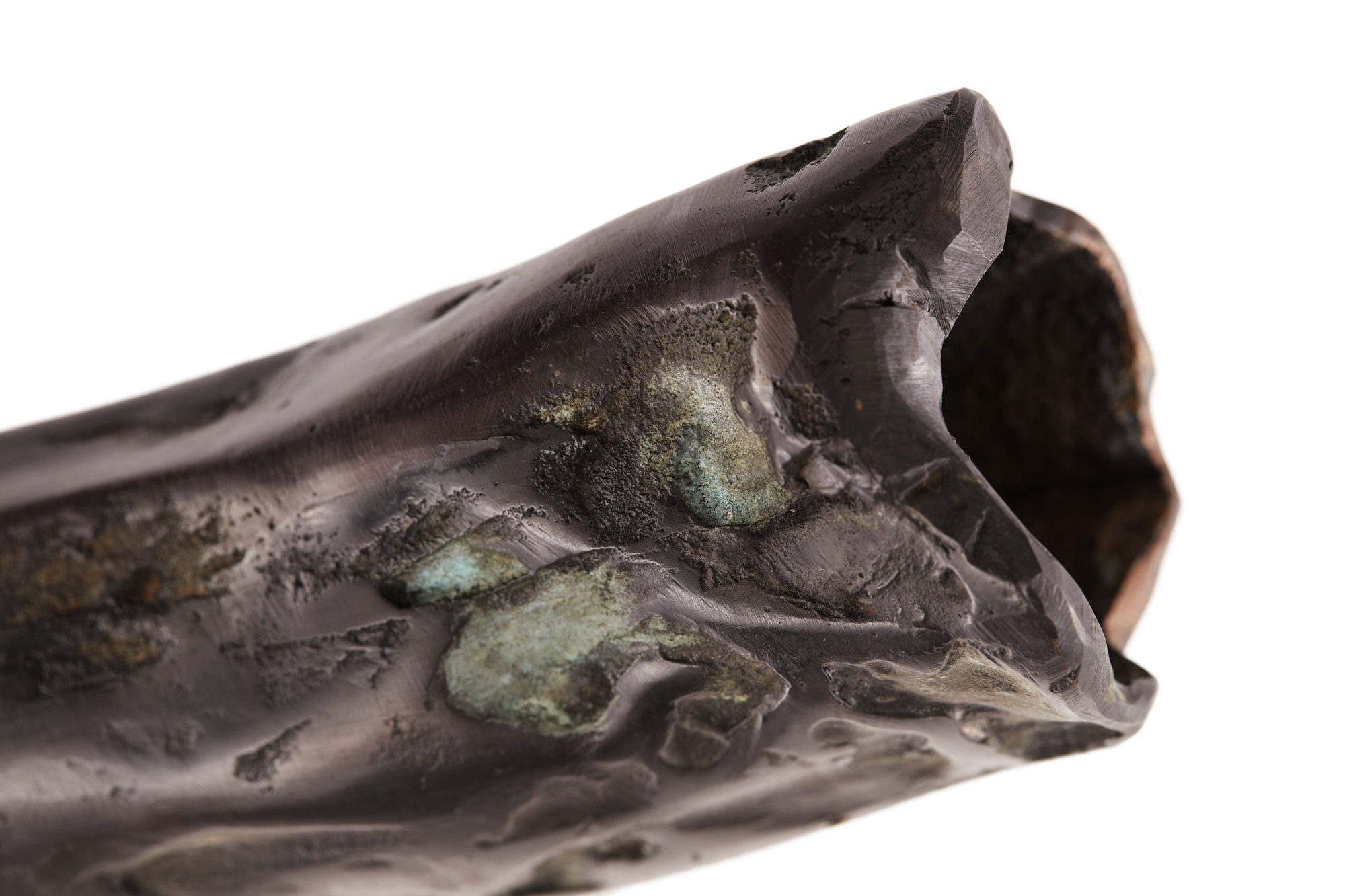
Bronze Dark Patina, by contrast, carries its own life. Applied by hand, each surface is unique. Within an interior, it develops nuances, absorbing and deepening light over time, becoming part of the atmosphere rather than a fixed statement.
On co-creating
Co-creation becomes meaningful when the counterpart brings conviction. The most valuable collaborations are those where a clear vision meets the willingness to commit to it. Not performative confidence, but decisiveness. That’s a challenge, and I mean that as a compliment. At that point, the dialogue moves beyond options and becomes about decisions.
A strong partner introduces their own discipline — architectural logic, a defined design language, a collector’s eye. “Beautiful” is no longer sufficient. The object must be right. When it is, it neither competes for attention nor diminishes its presence.
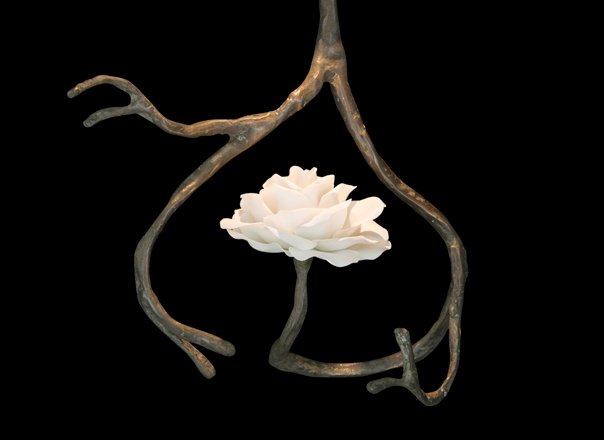
The Orpheus Nymphenburg collaboration is a perfect example, bringing two traditions into a single language: our sculptural approach to light and Nymphenburg’s porcelain craft. Porcelain demands precision and restraint. That tension elevated Orpheus to bloom. That’s what I look for in collaboration: not compromise, but a new, higher standard.
The same principle applies to custom work. It’s not about “everything is possible.” Many things are technically achievable, but that alone is irrelevant if the result lacks visual clarity. Custom matters only when it becomes more right.
Proportion, balance, rhythm, structural logic, character — these remain non-negotiable. Not because I’m difficult, but because I’m responsible for what leaves the atelier. I’m not going to attach my name to something I wouldn’t want in my own space.
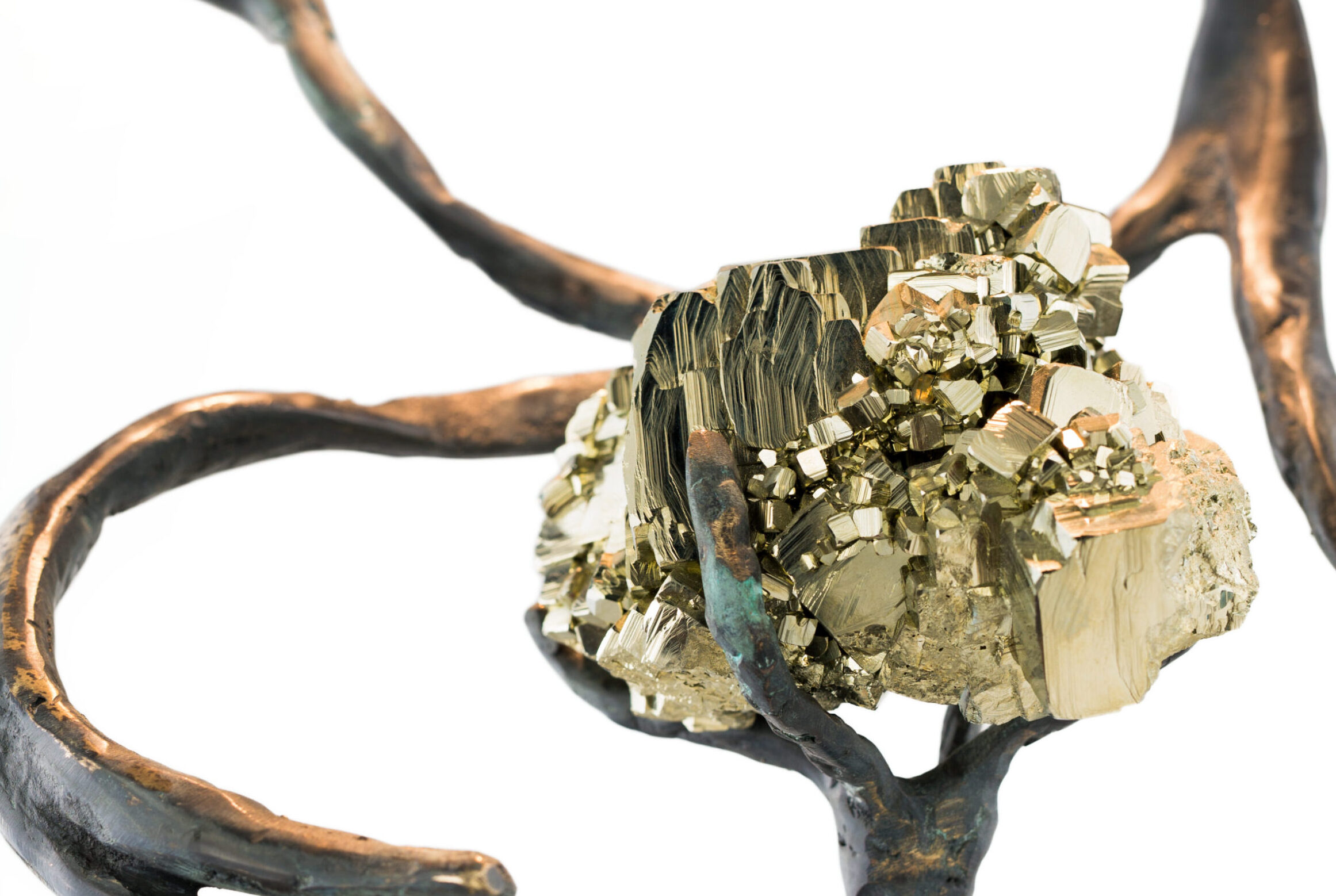
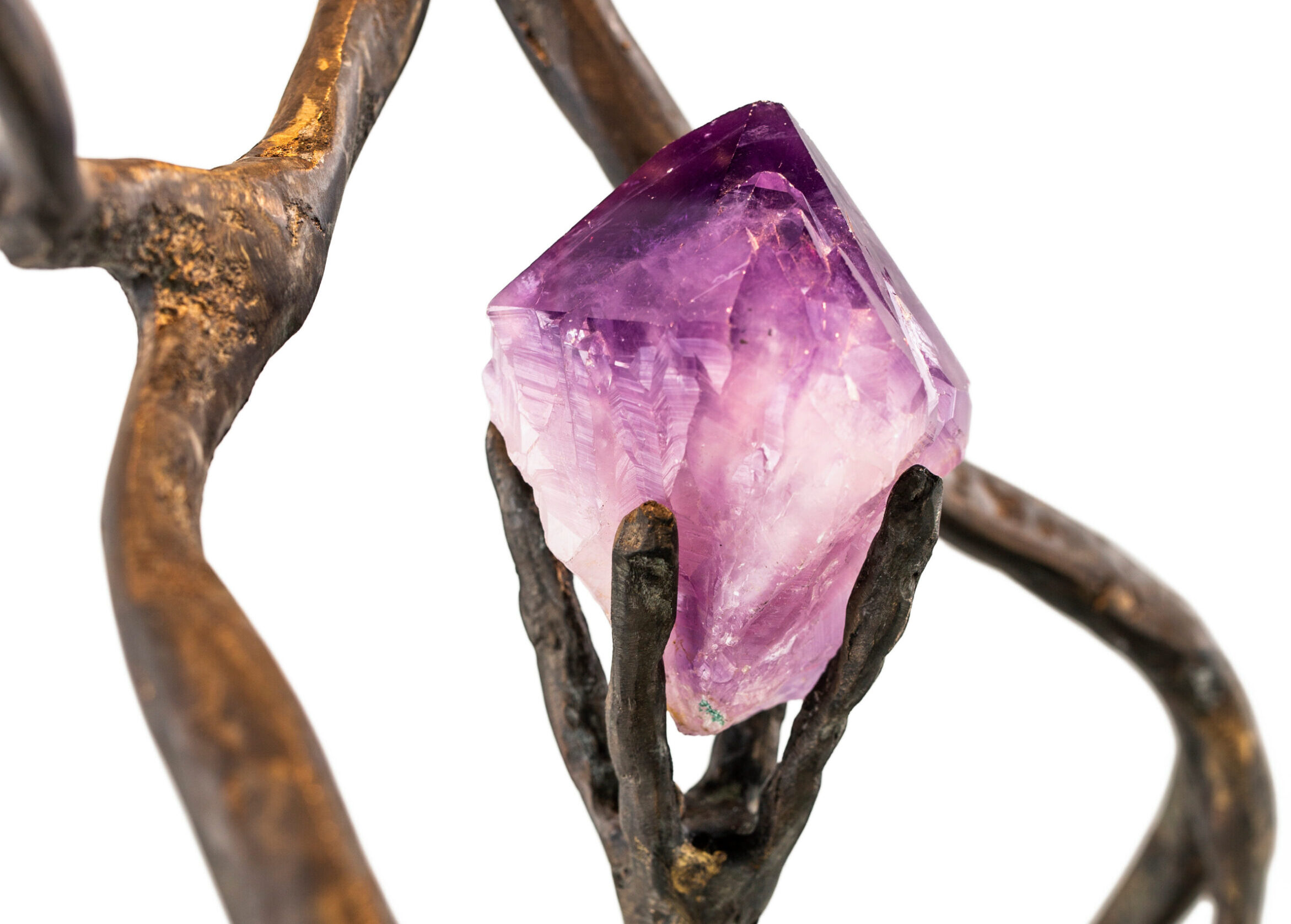
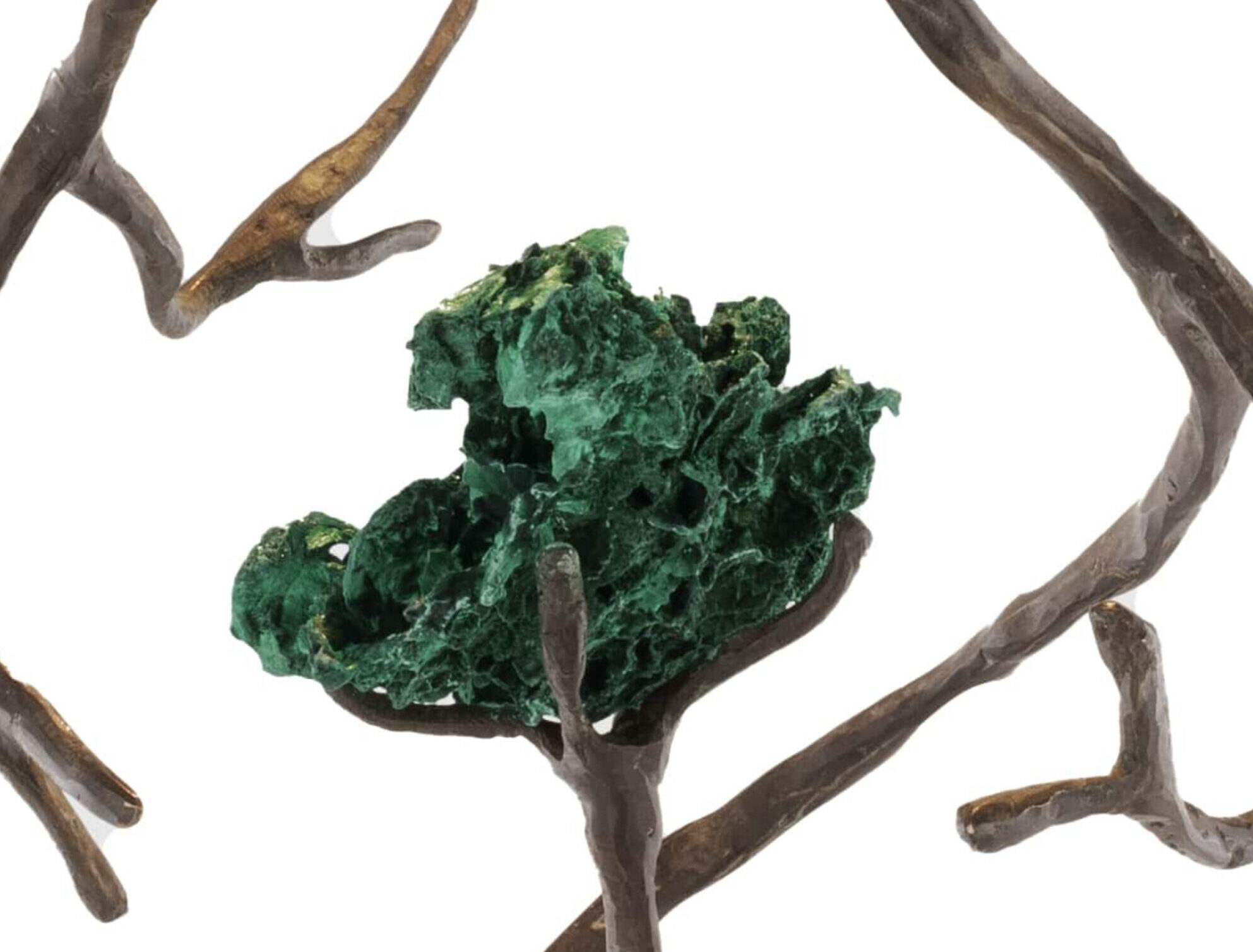
With Orpheus, an additional layer emerges that all art lovers respond to: the possibility to create the object around a stone or mineral with personal meaning. This is not an open-ended gesture. Materials are carefully selected for their structural and aesthetic integrity, and the composition is developed to reveal them with precision. When successful, the object holds the presence of a museum piece — not as something to be isolated, but as something that can stand alongside art, with authorship and permanence.
And I’ll be honest: we tend to attract people with strong opinions. I think that’s great. If you’re decisive, good — bring it.
On adaptability
Adaptability is not variation without limit. It’s judgement. The ability to determine what belongs and what does not. Harmony, rather than scale, defines success.
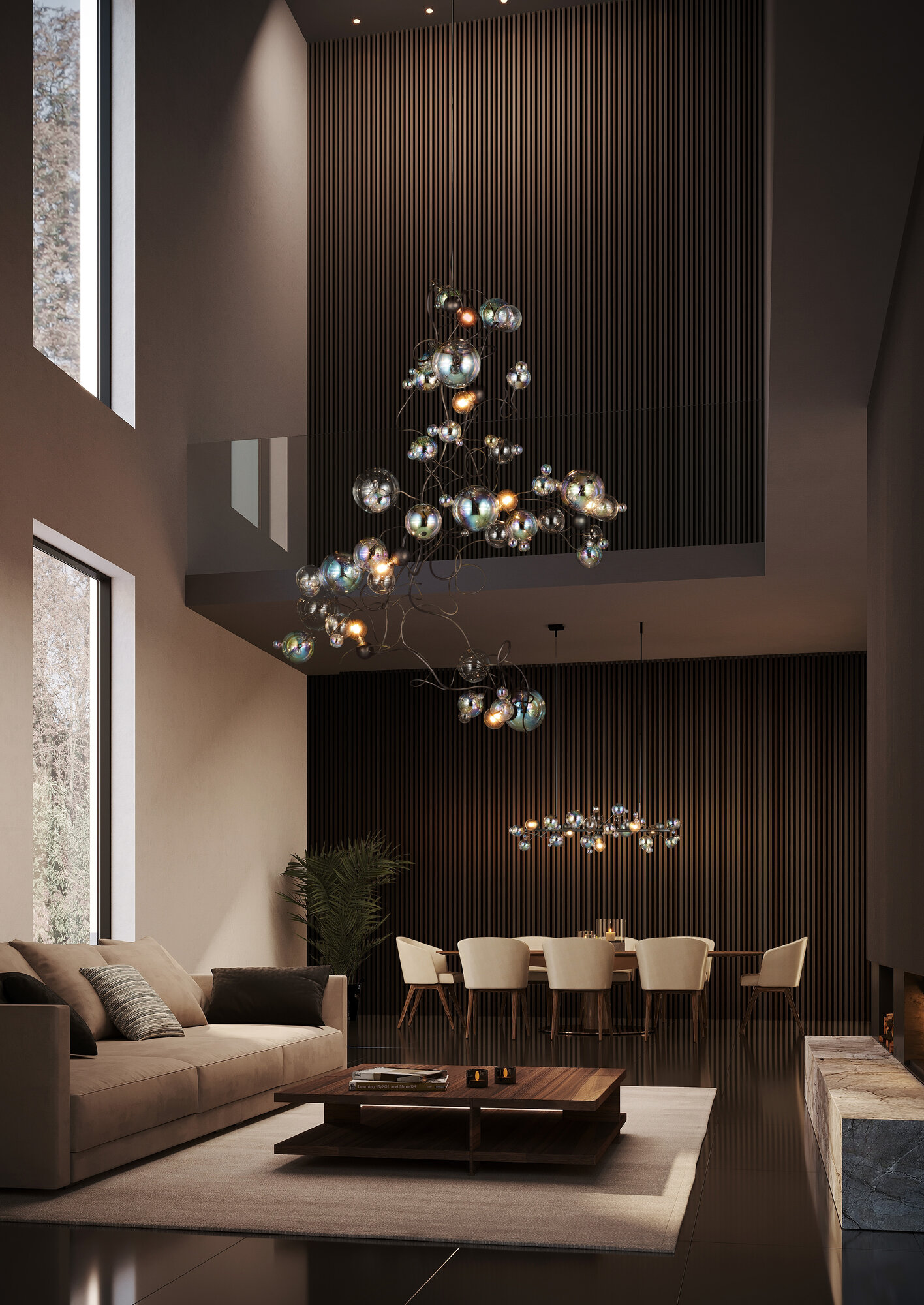
The essential dialogue exists between architecture, the designer shaping it, and the atelier. When resolved, the lighting does not feel added. It feels integral to the logic of the space.
Too often, lighting is scaled according to catalogue rather than architecture. The result may be technically correct, yet spatially ineffective. It looks fine in a clean product photo, then you install it, and the room doesn’t breathe.
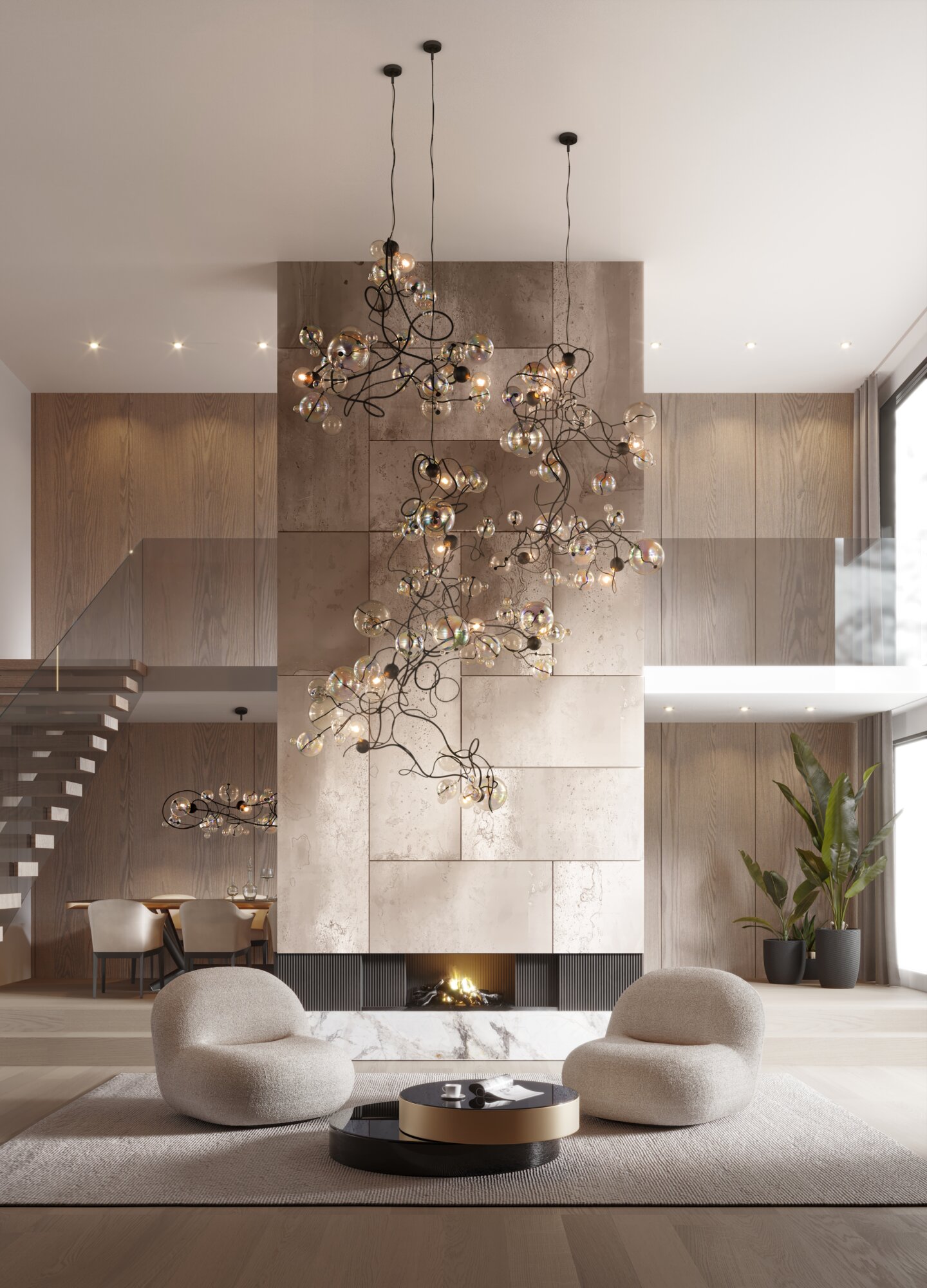
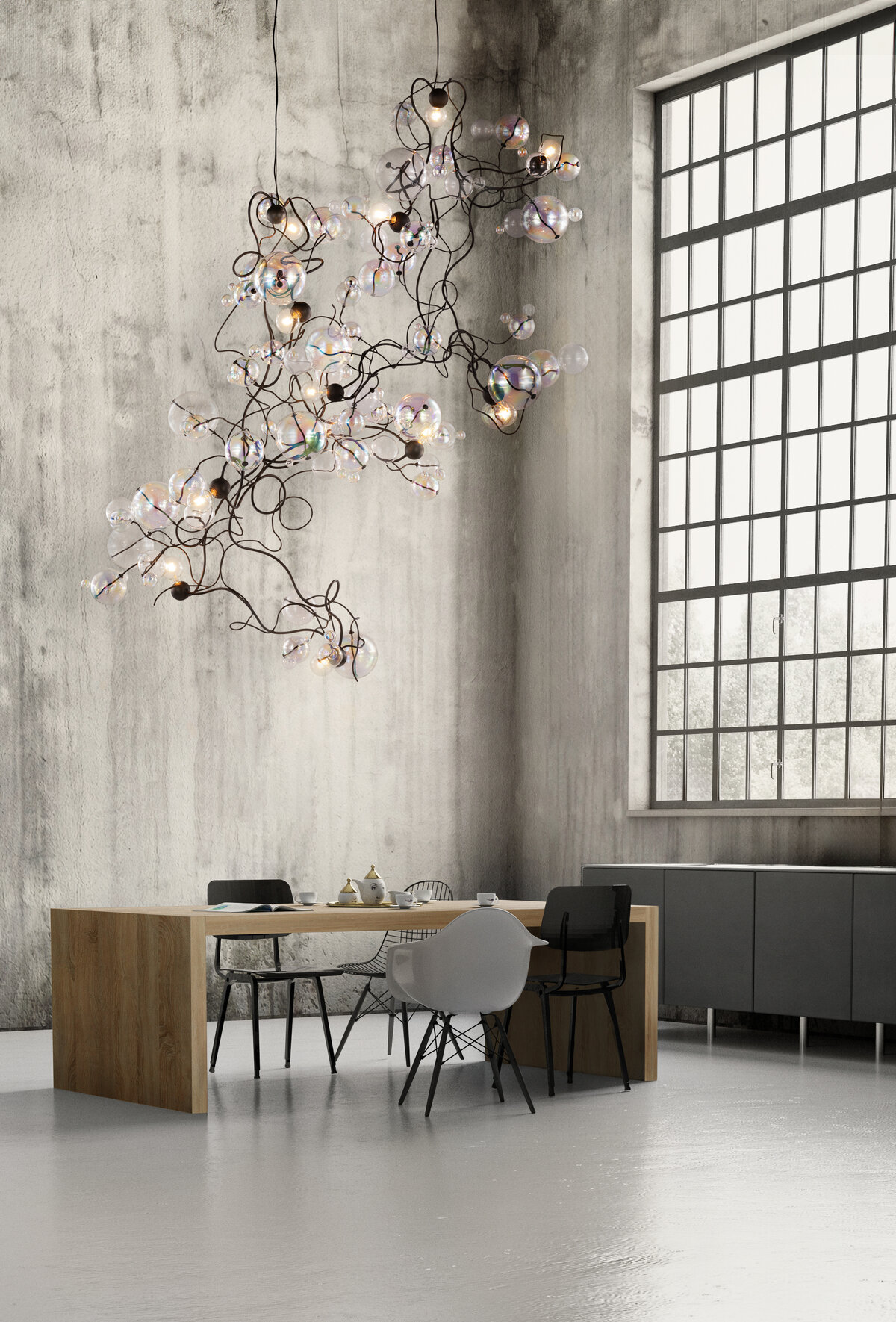
This is why I design with composition in mind: how elements can be scaled, repeated, rebalanced, and arranged to suit a volume and a viewpoint. Often, the strongest solution isn’t one big gesture. It’s a composed installation — multiple parts arranged to follow the architecture and introduce rhythm.
This is where precision becomes critical. Small adjustments carry disproportionate impact. A few centimetres can determine whether an object reads as balanced or heavy. A shift in position can alter shadow, reflection, and the perception of weight. These changes are not always immediately visible, but they are always perceptible.
For this reason, we remain involved from concept through installation. Not to control the process, but to ensure the final result is resolved as intended.

Create together with William Brand
We invite you to explore how sculptural lighting can become integral to your project. Work directly with William Brand and our atelier to to translate your dreams into handcrafted reality that responds precisely to your space.